

The AI Tab Is Coming Due

by Jhonatan Ramierz
Technology Director | AI & Enterprise Architecture | Dynamics 365, Azure, Intelligent Systems
Yesterday I got an email from GitHub. Microsoft Copilot is switching to usage-based billing on June 1st.
Most people read that and thought: price hike. I read it and thought: it's finally here.
Here's something most people don't realize. Even the most expensive AI subscriptions, the $200/month plans, haven't been covering what it actually costs to serve you. The labs have been absorbing the gap with venture capital. A single agentic coding session can burn through what a chatbot used to consume in weeks. The math was never going to hold forever.
GitHub just made it official. Anthropic is quietly tightening limits. OpenAI is pushing users toward the API. This isn't a coincidence, it's the same structural problem, playing out across the entire industry at once.

The pricing models were designed for a chatbot world. You ask, it responds, a few thousand tokens, manageable. Agentic AI blew that model apart. When an agent takes a task, refactor this codebase, review this repo, run this workflow, it doesn't exchange a few messages. It reads, writes, tests, retries, loops. One session can hit half a million tokens. That's the real reason GitHub had to move. Claude Opus went from a 7.5x cost multiplier to 27x under the new model. That single number tells you everything about how deep the subsidies were running.

There is also a pressure nobody is talking about enough: both OpenAI and Anthropic are reportedly moving toward IPO. The moment you file an S-1, investors see your margins in detail. You cannot go public showing deeply negative gross margins on consumer subscriptions. That timeline is an accelerant pushing this faster than pure economics alone would demand.
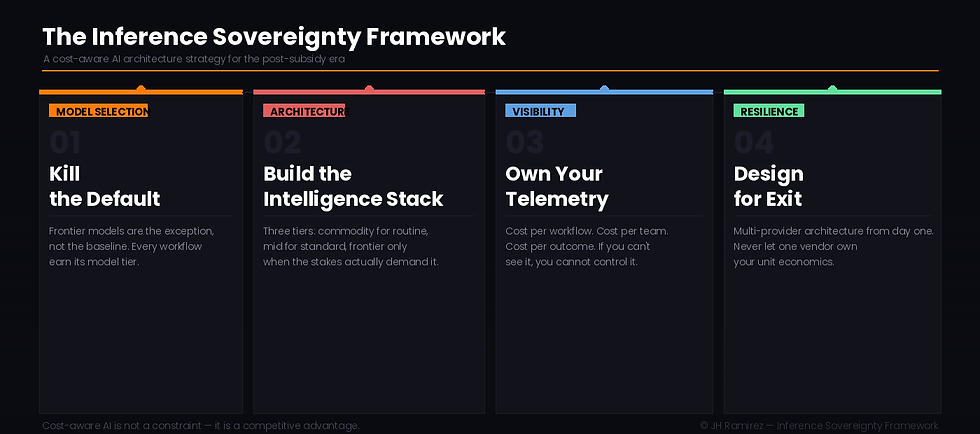
What breaks in this transition: teams that built AI workflows without any cost discipline, assuming flat-rate pricing would last. What survives: the ones who treated AI like real infrastructure, measured, optimized, and built with routing logic from the start. Cheaper models like Qwen, Kimi, and Mistral are about to get a serious second look from engineering teams that used to reach for frontier models by default.
My Take
I have been building AI solutions for enterprise clients for a couple of years now, and I will tell you something: the teams that are going to get hurt by this transition are not the ones using AI too much. They are the ones who never asked whether their AI usage was actually creating value, because the cost signal was hidden from them.
Subsidized pricing is comfortable, but it is also dangerous. It masks bad architecture decisions. It lets you put frontier models on tasks that a $0.001-per-million-token open-source model could handle. It lets agent sessions run without guardrails because compute felt free.
Real pricing is a forcing function. It will push teams to build smarter, route better, and measure what actually matters. For the people who have been serious about this from the start, it changes almost nothing. For the people who were just riding a good deal, the reckoning is going to be sharp.
The tab is coming due. The question is whether you built something worth paying for.
_____________________
Jhonatan Ramírez is a Full-Stack Web Developer and Web Designer specializing in PHP and JavaScript. Seamlessly blending a background in graphic design with logical, clean code, he focuses on building intuitive and visually striking digital experiences from the ground up.
Connect with him on LinkedIN @: https://www.linkedin.com/in/jhonatanramirez/

